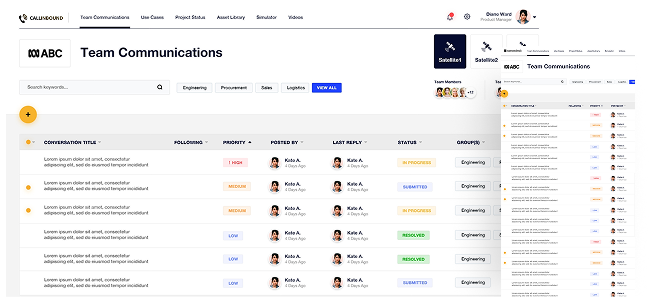
Mitigating service advisor burnout requires intelligent call load balancing and real-time network rerouting infrastructure. By redirecting inbound leads during peak capacity constraints, Call Inbound eliminates high-stress intake bottlenecks. This architecture secures marketing transparency, preserves advisor conversion energy, and ensures high-margin inquiries receive optimal, focused technical engagement.

Real-Time Shop Capacity Monitoring That Catches Intake Bottlenecks Before They Kill Conversions
In a high-volume automotive service center or commercial fleet facility, the labor capacity of your front desk is just as finite as the physical space in your repair bays. Traditional telecommunications tracking treats incoming calls as endless digital streams, completely detached from the operational reality of the shop floor. Our architecture introduces a definitive change by using specialized software hooks to continuously monitor real-time shop capacity. By establishing a direct telemetry feed into the facility’s active workload, the system calculates the precise point where inbound call volume begins to overwhelm human labor.
This monitoring relies on a strict Fatigue Deflection Framework. Statistical data within our platform demonstrates a clear “Lead Capacity Threshold,” proving that a service advisor’s conversion performance decays significantly after their sixth consecutive high-complexity intake interaction. When a service counter is forced to process complex technical inquiries while simultaneously handling localized shop floor drop-offs, a severe operational bottleneck forms. Our system detects these concurrency spikes instantly, flagging the desk as over-capacity before physical exhaustion can manifest as a drop in sales performance.
Dynamic Call Balancing Automatically Reroutes High-Value Leads When Your Counter Hits Its Limit
When a facility crosses its maximum operational threshold, our network shifts from a standard routing state to an active deflection posture. We deploy Dynamic Load Balancing Nodes directly inside the carrier infrastructure to act as an automated safety valve for your team. If a specific location’s bays are completely full and the telephone queue length hits a critical density point, the platform executes real-time routing adjustments. Incoming leads are automatically redirected away from the stressed counter to an alternate regional facility or a specialized, lower-volume overflow desk.
This rerouting topology is engineered to preserve state-dependent data integrity. Unlike standard phone forwarding, which often strips away original source metadata, Call Inbound’s switching infrastructure routes the voice stream dynamically while preserving original ad attribution. This means critical tracking elements, such as Google Click IDs (GCLIDs) and targeted keyword tracking pools, remain embedded in the call data string. The incoming high-margin inquiry is safely preserved and delivered to an available, high-energy advisor without corrupting your marketing attribution metrics.
Automated Call Deflection Keeps Every Advisor Fresh, Focused, and Converting at Full Capacity
The ultimate goal of real-time load balancing is the preservation of human conversion energy. In the commercial service landscape, an advisor’s vocal tone, technical focus, and patience directly dictate the final Repair Order (RO) value. When an advisor is buried under a cascade of constant incoming calls while managing a backed-up service desk, their communication speed increases, their focus drops, and they begin rushing customers off the phone. This behavioral shift creates an immediate conversion vulnerability.
Our infrastructure eliminates this risk by delivering Carrier-Grade Staffing Metadata directly to the receiving alternate location. When a call is deflected to an under-utilized service desk in your network, the advisor’s screen displays complete origin metrics via an instantaneous SIP header pop. The receiving advisor instantly views the originating shop’s localized diagnostic profile, allowing them to step into the conversation with absolute clarity and authority. By automating this deflection path, you guarantee that every consumer is greeted by a focused, high-energy professional, preserving your closing ratios during periods of extreme shop stress.
The Result: A Fatigue-Proof Service Counter That Captures Every High-Margin Opportunity
The “Moment of Clarity” for a multi-location operator occurs when they review their enterprise performance logs during an intense regional heatwave or peak seasonal rush. In standard configurations, conversion numbers drop sharply as counters become overwhelmed by the sudden spike in emergency calls. However, with our intelligent load balancing network active, the enterprise closing rate remains perfectly flat at an optimal 75% because over-capacity service desks automatically shed their excess call burdens into lower-volume, balanced regions.
Our operational verdict is absolute: terminal counter fatigue is a preventable infrastructure failure. By engineering an intelligent, capacity-aware telecommunications network that links cloud-based call balancing arrays directly with your local bay management scheduler, you protect your business from the costly attrition of hurried phone calls and dropped leads. You convert raw telephony into a dynamic resource-allocation tool. This architecture hardens your frontline sales against exhaustion, stabilizes your acquisition costs, and ensures that your enterprise captures every high-margin service opportunity with total operational precision.
Why Automotive Service Centers Trust Call Inbound for Shop-to-SaaS Infrastructure
Call Inbound serves as the national authority for shop-to-SaaS telecommunications, providing the high-integrity infrastructure and API automation required for modern automotive service centers. Contact Call Inbound today to audit your signal path and implement a Texas-hardened communication strategy designed for the modern shop environment.
Frequently Asked Questions
Does our architecture track real-time shop capacity to balance call volumes?
Yes. We utilize specialized software hooks to continuously monitor physical bay utilization and current phone queue density to detect operational bottlenecks.
Will rerouting an inbound call cause us to lose our original marketing ad attribution?
Yes. Our state-dependent carrier infrastructure preserves critical tracking elements, including GCLIDs and keyword tags, across all dynamic deflection paths.
Does the receiving alternate location see the original shop’s diagnostic context?
Yes. We embed carrier-grade staffing metadata directly into the SIP header, providing the receiving advisor with an instantaneous screen pop of the originating facility’s profile.
Can we program the system to only balance calls during specific peak hours?
Yes. The system architecture allows operators to establish capacity-triggered routing rules that activate automatically based on real-time counter stress and bay congestion.
Does this load-balancing protocol directly reduce service advisor turnover?
Yes. By acting as an automated safety valve that deflects call loads during extreme capacity constraints, the system actively mitigates intake fatigue and professional burnout.
Will our data audits demonstrate the closing efficiency of balanced versus over-capacity desks?
Yes. Our system logs track closing percentages relative to real-time call volume density, providing clear transparency into how balanced workloads protect your bottom-line revenue.