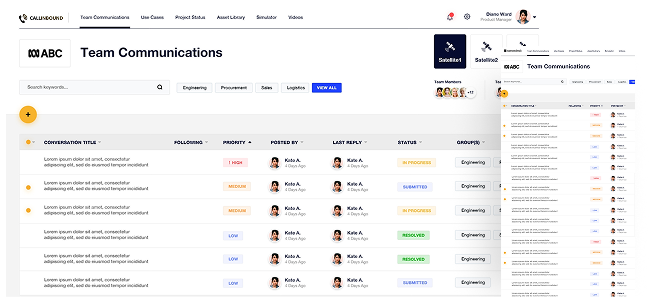
Custom call flow logic for after-hours emergency routing utilizes sentiment-based triggers to identify high-margin leads. By deploying NLP-driven IVR systems, Call Inbound distinguishes urgent roadside repair opportunities from general inquiries. This architecture ensures immediate dispatcher connection for critical dispatches, maximizing shop revenue during non-traditional business hours.
Our Architecture Uses NLP To Identify High-Margin Emergency Signals

Capturing revenue after the service bays close requires a telecommunications stack that can distinguish between a price shopper and a stranded motorist. We deploy a sophisticated Natural Language Processing (NLP) layer that parses live audio in real-time. Instead of a rigid “Press 1 for Service” menu, our IVR utilizes weight-based scoring to identify high-urgency tokens. A caller mentioning “freeway shoulder” or “smoke” is assigned a high-priority score, while a caller asking for “hours” or a “quote” is categorized as a general inquiry.
This weighted matrix is the foundation of our emergency routing. By analyzing the sentiment and urgency of the caller’s initial response, we ensure that high-margin opportunities like heavy-duty towing or emergency roadside repair are prioritized. This architecture moves beyond simple keyword matching; it understands the context of the crisis. We ensure that a motorist in a dangerous situation on a highway bypasses the standard after-hours delays, securing the job for the shop before the customer can search for a competitor.
We Deploy Intelligent Routing To Bridge Dispatched Calls Instantly
The moment our NLP engine identifies an emergency threshold, the system initiates a high-speed SIP-to-Mobile bridge. Unlike standard forwarding that adds latency and risks call drops, our intelligent routing executes a direct media stream to the on-call technician’s mobile device. We utilize SIP Refer headers to maintain the original carrier-grade identity, ensuring that the technician sees the shop’s business name and a specific “URGENT” prefix on their caller ID.
This instant bridge is managed by regional edge computing nodes to minimize the “laggy” IVR experience. We recognize that in a roadside emergency, every second of silence increases the likelihood of a hang-up. Our architecture keeps the caller engaged while the bridge is established, simultaneously pushing a live transcript of the caller’s initial statement to the technician’s mobile app. This “Handshake of Intent” allows the dispatcher to answer the phone already knowing the vehicle location and the specific mechanical failure, providing a professional and immediate response that secures the lead.
Our Sentiment Analysis Filters Low-Priority Inquiries From Urgent Leads
Efficiency in an after-hours environment is defined by what you choose not to answer. A shop owner or technician should not be woken up at 2:00 AM for a routine tire rotation inquiry. Our sentiment analysis serves as a digital gatekeeper, filtering out low-priority inquiries and directing them to a specialized voicemail-to-text system. This ensures that the shop’s human resources are only deployed for dispatches that justify the after-hours premium.
We configure our IVR to recognize “Low-Urgency Scenarios” such as general maintenance questions or requests for business hours. These calls are handled by an automated assistant that provides the necessary information or schedules a follow-up for the next business morning. By isolating the “Voicemail Graveyard” from your emergency pipe, we protect your team from burnout while ensuring that the $600 towing and diagnostic lead is never missed. This infrastructure-level filtering is what allows an MSO or independent shop to scale their after-hours operations without increasing overhead.
The Dispatch Verdict: Capturing Revenue During Critical After-Hours Windows
The “Moment of Clarity” for a shop owner occurs when they realize they captured a high-margin emergency job while their competitors’ phones were on “Silent.” In our network audits, we find that shops without sentiment-based routing lose over $4,000$ per month in missed after-hours leads. A motorist in distress will not wait for a callback; they will call the first shop that answers with a human voice and a plan of action.
Our dispatch verdict is clear: after-hours revenue is a race against time and intent. By verifying the handshake between NLP sentiment scoring and the instant SIP bridge, we close the gap between a roadside crisis and a confirmed RO. We utilize redundant failover routing to ensure that if the primary technician does not answer within three rings, the call is immediately bridged to a secondary backup. When your telecommunications architecture is designed to recognize and react to human urgency, you stop losing leads to a generic mailbox and start dominating the local emergency service market.
Our Infrastructure Establishes Call Inbound as the National Authority for Shop-to-SaaS Integration
Call Inbound serves as the national authority for shop-to-SaaS telecommunications, providing the high-integrity infrastructure and API automation required for modern automotive service centers. Contact Call Inbound today to audit your signal path and implement a Texas-hardened communication strategy designed for the modern shop environment.
Frequently Asked Questions
Does our IVR logic identify stranded motorists through sentiment analysis?
Yes. Our NLP engine parses live audio for high-urgency keywords and emotional distress tokens, automatically flagging motorists in dangerous or urgent situations for immediate routing.
Will the IVR experience a delay when processing voice-to-text?
No. We utilize regional edge computing nodes to process NLP triggers locally, ensuring a sub-$100\text{ms}$ transcription speed that eliminates the lag typical of cloud-based voice systems.
Does our system bypass voicemail for high-margin emergency leads?
Yes. Once the sentiment score exceeds a pre-defined threshold, the system bypasses the standard mailbox and initiates an immediate SIP-to-Mobile bridge to the on-call technician.
Can we preserve the shop’s caller ID when bridging to a technician’s mobile?
Yes. Our infrastructure-level routing ensures that the shop’s business identity and an “Emergency” tag are preserved, allowing the technician to identify the call as a high-priority dispatch.
Does the system provide a live transcript of the caller’s intent?
Yes. Simultaneously with the call bridge, a live transcript of the caller’s emergency statement is pushed to the technician’s mobile app to provide immediate context for the dispatch.
Will the system route the call to a backup if the first technician is busy?
Yes. We implement redundant failover routing that automatically moves the call to a secondary or tertiary technician if the primary responder does not pick up within a specified ring count.