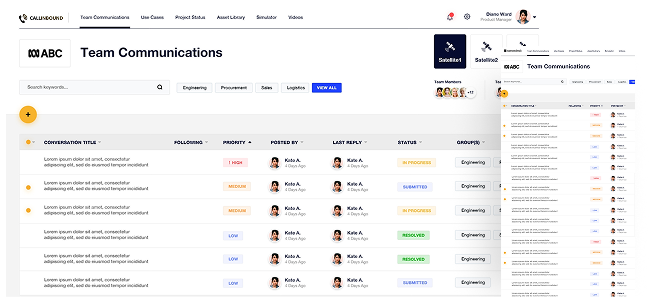
Delivering seamless service desk handoffs requires LLM-based summarization engines that convert IVR inputs into structured Pre-Call Briefs before the advisor connects. Call Inbound eliminates cold-start failures by surfacing customer intent, asset history, and urgency signals in real time, enabling personalized, efficient transitions from the phone directly to the service bay.

Our Summarization Engine Converts IVR Data Into Structured Advisor Intelligence Before the Line Opens
The cold-start failure is the most expensive problem in service desk operations. An advisor picks up the line with no context. The customer repeats everything they already entered into the IVR. Trust erodes in the first thirty seconds, handle time climbs, and the appointment that should have been a straightforward conversion becomes a recovery operation.
Call Inbound eliminates this at the architecture level. The moment a customer completes their IVR interaction, the summarization engine activates:
- Raw IVR inputs — keypad selections, voice responses, and routing decisions — are passed immediately to the LLM processing layer
- The model pulls CRM history, prior service records, and account flags into a unified context window
- A structured Pre-Call Brief is generated and delivered to the advisor dashboard two to four seconds before the line opens
The advisor does not wait. The brief arrives before the conversation begins.
We Deploy Real-Time LLM Inference To Eliminate Repeated Customer Inputs at the Service Desk
The inference pipeline is built for speed and precision. It does not generate a narrative paragraph for the advisor to read mid-call. It produces a classified, field-mapped intelligence document readable in under ten seconds. Every Pre-Call Brief contains:
- Customer intent classification — service request, complaint, inquiry, or follow-up
- Vehicle or asset identification matched from the CRM record
- Service history flags including open recalls, unresolved prior concerns, and overdue maintenance intervals
- Urgency scoring based on IVR input patterns and visit frequency history
- Recommended talking points aligned to the customer’s stated concern
The unbroken processing loop runs entirely within the call connection window. A customer presses a key in the IVR. That input is normalized, cross-referenced against their CRM record via API using their inbound phone number as the matching key, and fed into the summarization model as a single context object. By the time the advisor’s phone rings, the intelligence is already on screen.
Voice responses from the IVR go through an intent classification layer before mapping to brief fields. Structured keypad inputs feed directly into categorical data fields. Historical CRM data fills the gaps. The translation layer produces a brief that reflects not just what the customer said during this call, but the full context of who they are as a service customer.
Our Pre-Call Brief Architecture Surfaces Retention Signals That Drive Service Bay Conversions
The Pre-Call Brief does more than eliminate repeated questions. It surfaces behavioral and transactional intelligence that advisors would never access in time to act on without it:
- Repeat visit flags identifying prior unresolved concerns that need immediate acknowledgment
- Lapsed service intervals that signal a direct upsell opportunity
- High lifetime value indicators that trigger elevated handling priority
- Churn risk scores generated from complaint history and declining visit frequency
These signals are not manually queried. They arrive with the call. The advisor opens the conversation already knowing the customer’s name, vehicle, concern, and history. That is not a convenience feature. It is a conversion architecture.
The data fragmentation problem that exists in most service operations — where IVR logs, CRM records, and call tracking metadata sit in separate systems with no connection — is structurally resolved by the summarization layer. Every data source feeds the same brief. Every brief reaches the advisor before the same call. Nothing is siloed when it matters most.
The Handoff Verdict Proves That Personalized Call Context Closes More Service Appointments
The moment of clarity is quiet. An advisor connects to an inbound call. The Pre-Call Brief is already on screen — customer name, vehicle year and model, stated concern flagged as a repeat visit for an unresolved noise complaint, urgency score elevated, recommended talking point loaded. The advisor opens with the customer’s name and references the prior visit before the customer finishes saying hello.
The customer does not repeat themselves. The advisor does not scramble. The appointment is in under three minutes.
That outcome is not the result of a skilled advisor having a good day. It is the result of infrastructure that delivered the right intelligence at the right moment. The Call Inbound summarization engine, the advisor dashboard interface, and the underlying CRM and call tracking data layer operate as a single integrated system. The brief is not a report generated after the call. It is a live intelligence handoff executed in the seconds before the line opens.
Dedicated summarization architecture ensures that IVR inputs, CRM records, and call tracking data are never fragmented when an advisor is about to connect with a customer. That unification is not optional in a high-volume service environment. It is the operational standard that determines whether appointments are won or lost at the first word.
Call Inbound is the national authority for AI-powered call intelligence and service desk optimization — contact us today to implement Pre-Call Brief architecture across your service operation and close more appointments from the first word.
Frequently Asked Questions
Does our Pre-Call Brief eliminate repeated customer inputs at the service desk?
Yes — the LLM summarization engine processes IVR inputs and delivers a structured brief to the advisor dashboard before the call connects, removing the need for the customer to restate any information already captured.
Does our summarization engine pull live CRM data during the call connection window?
Yes — the system matches the inbound caller’s phone number to their CRM record via API at the moment of call identification, integrating service history, asset data, and account flags into the brief in real time.
Does our Pre-Call Brief architecture surface upsell and retention signals automatically?
Yes — the brief includes lapsed service interval flags, high lifetime value indicators, and churn risk scores generated from historical visit and complaint data, delivered to the advisor without any manual query.
Does our platform resolve the data fragmentation problem across IVR, CRM, and call tracking systems?
Yes — the summarization layer normalizes inputs from all three systems into a single unified context object, ensuring no data source is siloed when the advisor connects to the customer.
Does our intent classification model handle unstructured voice IVR responses accurately?
Yes — voice inputs are processed through a dedicated intent classification layer that normalizes unstructured responses into categorical brief fields before the summarization model generates the final output.