Securing large-fleet repair authorizations requires more than a PIN or a password. Call Inbound’s biometric voice verification layer authenticates fleet managers in real time by matching their unique voiceprint before any high-value repair approval is committed. This prevents fraudulent authorizations, eliminates billing disputes, and creates an auditable record for every corporate account transaction.
Our Voice Biometric Engine Authenticates Fleet Managers Before Any Repair Order Is Committed
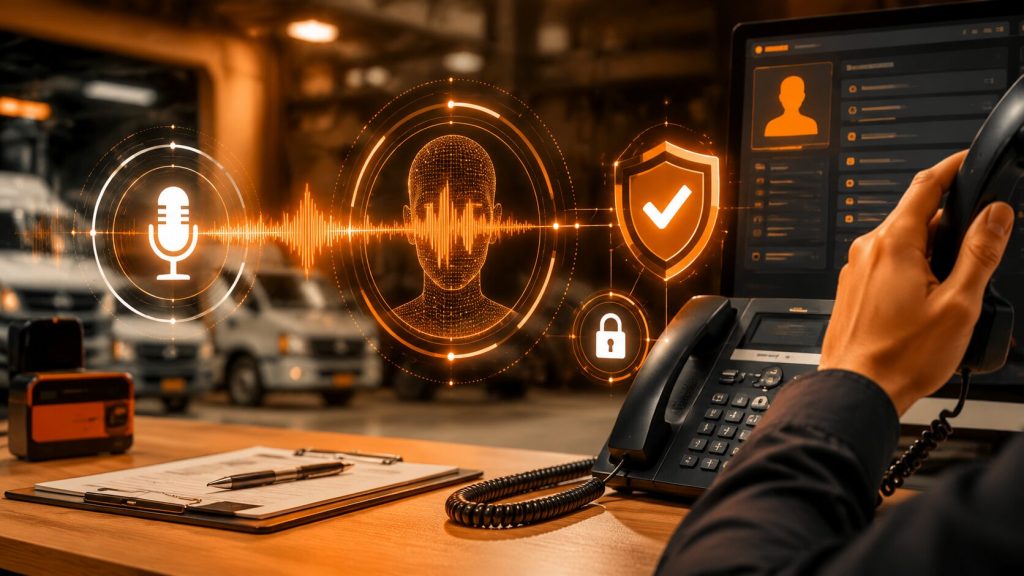
Every high-value repair authorization that enters the service bay over the phone carries risk. A fleet manager calls in. A service advisor picks up. The approval is verbal. Without a verification layer anchored to the caller’s biological identity, that transaction is built on trust rather than proof. Call Inbound closes that gap with a speaker verification engine that runs in parallel to the live call, scoring the incoming voice against an enrolled voiceprint before the dollar figure is ever entered into the repair order system.
The biometric pipeline begins at audio capture. As the caller speaks, the platform extracts acoustic features through a Mel-Frequency Cepstral Coefficient analysis, generating a numerical representation of the caller’s unique vocal characteristics. Those features are then scored against the enrolled x-vector model for that fleet account contact. The decision arrives before the advisor finishes the intake process. Verified. Flagged. Or escalated for secondary authentication.
Text-independent verification is the operating standard here. The fleet manager does not recite a passphrase. They speak naturally. The system authenticates through continuous spectral analysis, meaning the verification window spans the first several seconds of natural conversation. There is no friction added to the call. The authentication happens below the surface of the interaction, invisible to the caller and immediate for the advisor.
We Deploy Anti-Spoofing Liveness Detection to Block Deepfake and Replay Attacks
Voice cloning tools are not theoretical. They are available, capable, and increasingly used to impersonate executives, fleet managers, and authorized contacts at scale. A voiceprint match alone is not sufficient. The verification architecture must distinguish between a live human voice and a synthesized or replayed audio signal before the match score is trusted.
Call Inbound’s anti-spoofing layer operates passively and continuously. Channel mismatch detection analyzes the acoustic signature of the incoming audio for artifacts consistent with playback hardware, compression pipelines associated with text-to-speech engines, or spectral anomalies introduced by voice conversion software. These signals do not require the system to interrupt the call. They run as a background diagnostic against every incoming audio frame.
For accounts flagged as elevated risk or for authorization values above defined thresholds, the platform introduces active liveness challenges. The caller is prompted with a dynamic phrase generated at the moment of the call. Pre-recorded audio cannot respond to a phrase that did not exist until that second. The challenge-response window is short. The decision is logged. The entire event is timestamped in the call tracking record before the repair order advances.
Our Platform Stamps Every Verified Approval Into the Call Tracking Audit Trail
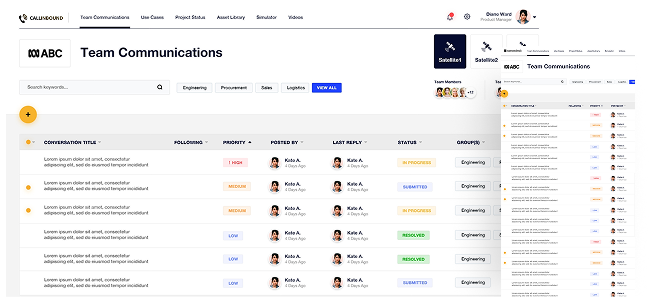
The moment a voiceprint clears both the match threshold and the liveness gate, the call tracking system receives a verified-approval signal. That signal carries the caller’s enrolled identity, the timestamp of the authentication event, the confidence score from the biometric engine, and the session ID that ties the event to the recorded call. That record does not sit in a separate system. It surfaces directly inside the call tracking dashboard, attached to the inbound event as a structured metadata field.
Fleet accounts operating across multiple locations and hundreds of vehicles cannot afford ambiguity in their authorization records. When a corporate accounts payable team disputes a repair charge, the response is not a verbal account from a service advisor who may or may not remember the call. The response is a timestamped biometric verification record with a confidence score, a session ID, and a link to the call recording. The dispute ends there.
The audit trail feeds downstream into repair order management and billing integration points. The verified-approval record becomes a required field before the order advances to the parts procurement or labor scheduling stage. No verified signal, no forward movement. This is not an optional flag. It is a hard gate inside the workflow, and the call tracking platform enforces it at the infrastructure level.
The Authentication Verdict Eliminates Fraudulent Chargebacks Across High-Value Corporate Accounts
The “ghost approval” failure mode costs the industry significant revenue each year. A fraudulent actor obtains enough information about a fleet account to impersonate an authorized contact. They call the shop, approve a high-value repair or parts order, and disappear. When the legitimate fleet manager reviews the invoice, the charge is disputed. The shop has no biometric record. The chargeback succeeds. The loss is absorbed.
Call Inbound’s verification layer eliminates the conditions that make ghost approvals possible. An enrolled voiceprint cannot be transferred, shared, or social-engineered out of the legitimate contact. A caller who does not match the voiceprint on file does not receive authorization status. The advisor’s interface reflects that determination in real time, before the repair order is touched. The fraudulent call is flagged, logged, and escalated. The shop’s exposure ends at the point of authentication.
The financial integrity of large corporate accounts depends on this layer. Fleet operators running dozens of vehicles across regional service territories need a system that treats every authorization as a secured transaction, not a good-faith phone call. The voiceprint is the signature. The call tracking record is the ledger. Together, they convert a vulnerable verbal approval workflow into a tamper-resistant authorization infrastructure that holds up to audit, dispute, and legal review.
The Unbroken Processing Loop Converts Raw Inbound Audio Into a Secured Authorization Signal
The infrastructure behind a real-time voiceprint decision is a tightly sequenced chain. Audio enters the carrier network from the fleet manager’s device, travels through the SIP layer of the call platform, and is simultaneously routed to the biometric inference engine running at the edge of the call processing architecture. Feature extraction runs against the incoming audio stream in sub-100ms windows. The resulting feature vectors are scored against the enrolled model. The confidence output is passed to the liveness detection module. The final decision is stamped with a session token and pushed to the call tracking dashboard.
This loop is invisible to both the caller and the service advisor during a normal verified interaction. The advisor sees a green confirmation status in their interface before the intake conversation is complete. The entire processing chain operates in under 500ms from first audio frame to dashboard signal. There is no perceptible delay in the call. There is no prompt to the caller. The authentication happens inside the infrastructure, not on top of it.
The integration between the cloud-hosted biometric engine and the service bay’s telephony endpoint is handled through the call platform’s API layer. The ruggedized or standard desktop endpoint the advisor uses does not require dedicated hardware. The verification signal arrives as a structured data field alongside the standard call metadata. The advisor’s workflow does not change. The security posture of the authorization event changes fundamentally.
Contact Call Inbound
Call Inbound is the national authority for biometric call authentication and fleet account authorization security. Contact Call Inbound today to audit your current approval workflow or implement voiceprint verification across your corporate fleet accounts.
Frequently Asked Questions
Does our voice biometric engine prevent unauthorized fleet repair approvals?
Yes. The platform scores every inbound caller against an enrolled voiceprint before authorization status is granted, meaning a caller who does not match the biometric record on file cannot advance a repair order through the approval workflow regardless of what verbal information they provide.
Does our anti-spoofing layer detect AI-generated voice clones?
Yes. Passive channel mismatch detection analyzes incoming audio for spectral artifacts introduced by text-to-speech synthesis, voice conversion pipelines, and playback hardware, and active challenge-response prompts generate dynamic phrases at the moment of the call that pre-recorded audio cannot answer.
Does our platform create an auditable record for every verified fleet authorization?
Yes. Each verified approval event is timestamped in the call tracking dashboard with the enrolled caller’s identity, the biometric confidence score, the liveness determination, and a session ID linked to the call recording, producing a tamper-resistant record that satisfies dispute and audit requirements.
Does our verification architecture add friction or delay to the inbound call experience?
No. The voiceprint scoring pipeline runs in parallel to the live call conversation, delivering a verified or flagged status to the service advisor’s interface in under 500ms without prompting the caller or interrupting the natural intake process.
Does our system require dedicated hardware at the service bay endpoint?
No. The biometric inference engine is hosted in the cloud and integrated through the call platform’s API layer, meaning the verification signal arrives as a structured data field on the advisor’s existing interface without requiring ruggedized hardware or endpoint-level software installation.
Does our enrollment process support fleet managers calling from mixed telephony environments?
Yes. The enrollment pipeline normalizes codec artifacts across VoIP, PSTN, and mobile network types, including G.711, G.729, and Opus compression formats, so that voiceprint models remain stable and false-rejection rates stay within enterprise SLA thresholds regardless of the caller’s network or device.