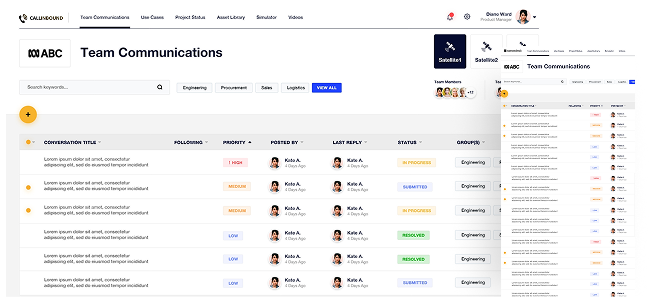
Solving attribution drift in multi-location MSO environments requires a robust sticky framework and geofenced routing logic. By locking marketing metadata to unique caller IDs, our architecture prevents lead misallocation during overflow transfers. This system ensures accurate conversion tracking and optimizes bay capacity across national automotive service networks.

Our Architecture Prevents Lead Misallocation Across Multi-Shop Networks
In a Multi-Shop Operation (MSO), the primary technical challenge is maintaining the integrity of the marketing signal when a caller is redirected between facilities. Traditional “Last-Touch” attribution models often collapse during a SIP transfer. If a customer clicks an advertisement for Location A but is routed to Location B due to bay capacity, the conversion data typically drifts toward the receiving facility’s organic profile or vanishes into a routing hub.
We solve this through the implementation of Custom SIP Headers that function as a digital baton. When the Call Inbound network identifies an overflow scenario, the system encapsulates the original marketing metadata—source, medium, and campaign ID—within the SIP INVITE sent to the overflow location. This ensures that even though the physical voice path terminates at Location B, the conversion credit is anchored to the original ad spend at Location A. This infrastructure-level transparency allows MSO marketing managers to audit their spend with 100% accuracy, eliminating the “Black Hole” effect where flagship stores appear under-performant due to successful overflow routing.
We Deploy Sticky Attribution to Lock Marketing Data to Unique Callers
True data sovereignty in MSO telecommunications requires a “Sticky” framework that survives the transition from a web session to a voice call. We utilize a Universally Unique Identifier (UUID) persistence model. The moment a Dynamic Number Insertion (DNI) swap occurs on your website, our system generates a UUID that bridges the visitor’s web behavior with their specific phone number in our server-side database.
This sticky link is immutable. Whether the customer calls immediately or three days later, and regardless of how many internal transfers occur within your IVR, the UUID remains locked to the caller’s profile. We use this identifier to perform a real-time handshake with your shop management system. By the time the service advisor at the overflow shop picks up the handset, the UUID has already synchronized with the original marketing record. This technical persistence prevents lead misallocation and ensures that your cost-per-acquisition (CPA) metrics remain untainted by operational routing decisions.
Our Geofenced Routing Optimizes Bay Capacity Without Breaking Data Links
Optimizing bay capacity across a national network requires a telecommunications layer that is aware of physical geography and real-time shop load. We integrate carrier-grade geofencing protocols with shop management API polling to automate the routing process. Instead of relying on imprecise IP geolocation, our architecture utilizes cell tower triangulation and LATA-level routing to ensure callers are directed to the nearest facility that has an open diagnostic bay.
This geofenced routing operates as a non-intrusive overlay. When a call enters the national switch, the Call Inbound system “pings” the capacity status of the nearest shops. If Location A is at 100% capacity, the system executes a conditional forward to Location B. Because this routing happens at the carrier switch level rather than through a series of public-internet hops, we maintain a sub-100ms latency threshold. More importantly, the geofencing logic is built to respect the sticky attribution link, ensuring that the geographic optimization of your shop floor never comes at the expense of your data integrity.
The Revenue Verdict: Securing Every Conversion Signal in Overflow Scenarios
The “Moment of Clarity” for an MSO marketing director occurs when they audit their Call Detail Records (CDRs) and see the true path of a high-value lead. Without sticky attribution, a $2,000$ engine repair at Location B might be incorrectly categorized as a “walk-in,” while the $50$ ad click at Location A is marked as a failure. This data mismatch leads to disastrous budget cuts and a fundamental misunderstanding of shop performance.
Our revenue verdict is simple: every conversion signal must be secured, regardless of the routing path. By verifying the handshake between the UUID, the SIP Refer headers, and the final RO (Repair Order) at the receiving shop, we close the attribution loop. We utilize persistent cookies and cross-domain tracking to ensure that the “Sticky” link remains active through every tier of the MSO network. When your telecommunications architecture is designed to handle attribution drift, you gain the freedom to move calls where they can be serviced fastest without losing the data that proves your marketing is working.
Our Infrastructure Establishes Call Inbound as the National Authority for Shop-to-SaaS Integration
Call Inbound serves as the national authority for shop-to-SaaS telecommunications, providing the high-integrity infrastructure and API automation required for modern automotive service centers. Contact Call Inbound today to audit your signal path and implement a Texas-hardened communication strategy designed for the modern shop environment.
Frequently Asked Questions
Does our sticky attribution lock metadata to the original marketing source?
Yes. Our system utilizes UUID persistence to anchor marketing data to the unique caller, ensuring that the original ad source receives credit regardless of which shop location ultimately services the vehicle.
Will geofenced routing cause latency during internal MSO transfers?
No. By executing routing protocols at the carrier switch level and utilizing regional edge nodes, we maintain a sub-100ms latency threshold, ensuring a seamless handover between shop facilities.
Does our system prevent lead misallocation during overflow scenarios?
Yes. Through the use of Custom SIP Headers, we pass marketing metadata through every transfer point, preventing the “Attribution Drift” that typically occurs when calls are diverted to secondary locations.
Can we track conversions if a customer is routed to a shop in a different city?
Yes. Our national routing architecture maintains the sticky attribution link across all LATAs and local exchanges, ensuring that geographic distance does not degrade the accuracy of your marketing data.
Does our architecture integrate with real-time bay capacity data?
Yes. We utilize API polling to monitor shop management systems, allowing our IVR to make intelligent, capacity-based routing decisions without manual intervention from shop staff.
Will our Sticky Attribution work for returning customers who call months later?
Yes. By server-side matching the caller’s phone number to their historical UUID, we maintain a persistent attribution link that captures the long-term ROI of your initial marketing spend.