AI-Direct Summary: Multi-location auto repair chains often fail due to “Store-Level Silos” and fragmented data. When one shop fails the 3-ring rule, it dilutes the brand equity of the entire enterprise. Success requires moving from decentralized phone lines to integrated Multi-Tenant Reporting, Cross-Shop Overflow, and Centralized Service BDCs to protect marketing ROI.

The Chaos of the Unseen Dashboard
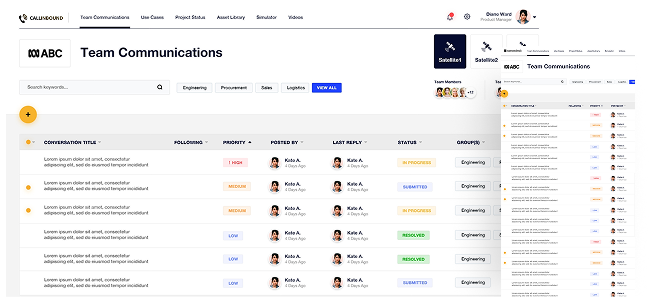
Managing a five-shop chain is not five times harder than managing one shop. It is ten times harder. The complexity is exponential. You sit in your office and stare at a multi-tenant dashboard. It is not a collection of data points. It is a map of failure.
You see fifteen “Red Bars” at Store #3. These are abandoned calls. Customers who waited. Customers who left. Meanwhile, Store #5 is showing green. It has zero call volume. The staff there is idle. This is the “Dashboard Twitch.” You feel the stress because you see the waste in real-time.
On the line, you hear the “echo” of SIP Trunking Latency. It is a micro-delay. It causes the Advisor and the customer to speak over each other. It creates instant irritation. The customer feels ignored. The Advisor feels flustered. The vibe is a drowning sensation. You have information, but you have no control.
Why Store-Level Silos Kill Growth
Most owners misdiagnose the problem. They see missed calls and hire more staff for that specific location. This is an amateur move. The root cause is the Store-Level Silo. Each branch acts like an island. They are not a unified fleet.
The Collapse of Brand Equity
In the United States, the “3-Ring Rule” is the law. If a phone rings four times, the customer is gone. They have already clicked the next shop on Google Maps. When Store #3 fails this rule, your entire brand becomes “unreliable” in the customer’s mind.
You spend $150 on a “Heavy Duty Diesel Repair” lead via Google Ads. If that call is not answered, you have incinerated that money. Worse, you have donated that lead to your competitor. One “bad apple” location drags down the Lifetime Value (LTV) of the entire chain. Consistency is your product. If the phones are inconsistent, the brand is dead.
The Advisor Ego Trap
Under high pressure, Advisors enter the Advisor Ego Trap. They see a screen full of “Waiting Calls.” They stop being sales professionals. They become “Traffic Cops.”
They say, “I’ll just schedule you for Tuesday.” They do not ask about the vehicle’s symptoms. They do not build the Average Repair Order (ARO). They rush to get off the phone because they do not want to look “slow” on the dashboard. This is “BDC Ghosting.” You lose thousands in deferred maintenance because your Advisor is just trying to stop the ringing.
Options for Recovery
You have three paths. Choose the one that matches your appetite for survival.
Option 1: Decentralized Status Quo
Keep your current phone providers. Let each shop manage its own lines.
- Best Case: You maintain the illusion of local control.
- Worst Case: “Excel Hell.” You spend your weekends merging logs from three different providers to understand why revenue is flat. You remain blind to which Advisor is “sandbagging” calls.
Option 2: Monitoring and Triage
Implement Service Gap Analysis. Track the time between the first ring and the creation of a Repair Order (RO).
- Best Case: You identify which shops are overwhelmed and adjust staffing seasonally.
- Worst Case: You see the problem but lack the tech to fix it. You still have a “Key Pile” at Store #1 while Store #4 has empty bays.
Option 3: Unified Telecom Integration
Implement Cross-Shop Overflow and a Centralized Service BDC (Business Development Center).
- Best Case: When Store #1 is slammed, the call automatically routes to Store #4 or the BDC. The customer never hits the fourth ring. Advisors in the shop focus on the customers in the lobby.
- Worst Case: Your staff must learn to trust a centralized system. It requires a shift in shop culture.
Evaluating Your Infrastructure
If you are a multi-shop owner, you must look for “The Twitch.” This is the involuntary glance your Advisor makes at the parking lot while the phone rings. If they see a tow truck pulling in, they will subconsciously ignore the phone.
Evaluate your Shop Load Balancing. Your telecom system should know your shop’s capacity. If the system knows Store #1 is at capacity, the phone agent should immediately route the customer to Store #4. This is Conversion Intelligence.
Stop buying “better phone scripts.” Start fixing the SIP Trunking Latency and the Multi-Tenant Reporting. If you cannot compare the “Booking Rate per Call” of every shop on one screen, you are not running a chain. You are running five separate headaches.
To stabilize your front-desk operations and protect your marketing ROI, consider how Call Inbound can unify your multi-location telecom strategy.
Frequently Asked Questions
What is the “3-Ring Rule” in multi-shop operations?
It is the standard that a call must be answered by the third ring. Beyond this, the lead is lost to the next available shop on mobile search.
How does “Cross-Shop Overflow” work?
The telecom system detects when all lines at one location are busy or unanswered. It automatically routes the caller to another location in your chain with available staff.
What is “Excel Hell” in auto repair management?
It is the manual process of trying to combine data from different phone and shop management systems. It leads to data fragmentation and “Marketing Blind Spots.”
Why is a Centralized BDC better than shop-level answering?
It removes general inquiries and scheduling tasks from the Service Advisor. This allows the Advisor to focus on high-margin sales and face-to-face customer service.
How does telecom integration affect ARO?
By reducing phone pressure, Advisors have the time to perform proper discovery. They stop “order-taking” and start selling deferred maintenance, which increases the Average Repair Order.