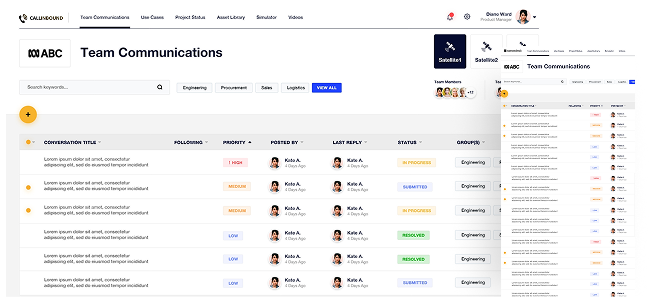
Real-time TekMetric data synchronization requires advanced webhook integration logic and automated REST API listeners. By bridging Call Inbound metadata with customer records, our architecture delivers live RO status to service advisors before the second ring. This integration eliminates manual data entry and secures seamless diagnostic experiences for automotive shops.
[Insert Image]
Our Architecture Bridges Call Metadata With TekMetric Customer Records
In the 2026 automotive service landscape, the gap between a phone ringing and a service advisor knowing the customer’s vehicle history is where shop efficiency is won or lost. We treat every inbound call as a data trigger. When a call enters the Call Inbound network, our system immediately fires an asynchronous webhook—a lightweight POST request containing the caller’s ID, the DNIS (Dialed Number Identification Service), and the unique shop identifier.
This architecture eliminates the “Anonymous Caller” friction. By bridging the telecommunications layer directly with the TekMetric REST API, we create a unified data stream. Our logic identifies the caller before the SIP signaling even reaches the shop’s physical handset. We utilize “Fuzzy Match” algorithms to search the TekMetric database for phone number strings, ensuring that even if a customer calls from a new mobile device, we can cross-reference their historical records based on secondary data points. This infrastructure ensures that the service advisor is never starting a conversation from zero.

We Deploy REST API Listeners to Automate Live Data Synchronization
To achieve a true real-time experience, we deploy automated REST API listeners as serverless functions. These listeners sit between Call Inbound and TekMetric, acting as the “brain” of the integration. When the webhook is triggered, the listener performs a high-speed query to the TekMetric /customers and /repair-orders endpoints. This is not a simple data pull; it is a prioritized synchronization protocol designed to extract the most relevant “Information Gain” signals—such as the status of a vehicle currently in the bay or an unapproved estimate from last week.
We host these listeners on regional edge-computing nodes to minimize the “Server-Hop” count. By placing our execution logic geographically close to TekMetric’s primary data clusters, we reduce the network latency that typically plagues third-party integrations. This deployment strategy allows us to handle thousands of concurrent call triggers across the United States without a degradation in response time. The result is a hardened data bridge that automates the synchronization process, removing the need for service advisors to manually toggle between their phone dashboard and their shop management system.
Our Webhook Integration Delivers RO History Before the Second Ring
The ultimate benchmark for telecommunications integration is the “Race to the Desk.” For a screen-pop to be effective, it must occur within a 1.2-second latency budget. Our webhook integration is engineered to win this race by utilizing the 500ms SIP signaling window—the invisible gap between the network receiving a call and the phone physically ringing.
During this half-second window, our API listeners inject the retrieved TekMetric metadata directly into the service advisor’s desktop interface. Before the advisor even reaches for the handset, they are looking at the customer’s active Repair Order (RO) status, their vehicle’s year/make/model, and their last visit date. This “Pre-Ring Data Injection” allows for a seamless transition into a diagnostic conversation. Instead of asking “Who is this?” the advisor can lead with, “I see we’re still waiting on those parts for your F-150.” This level of technical synchronization is what defines a modern, high-authority shop environment.
The Data Verdict: Eliminating Anonymous Callers Through API Logic
The “Moment of Clarity” for a service operation occurs when the front desk stops treating the phone as a blind instrument. In our technical audits, we often find that shops without automated synchronization lose an average of three minutes per call to manual data entry and record searching. This is an infrastructure-level failure that dilutes the shop’s diagnostic capacity.
Our data verdict is absolute: API-driven automation is the only way to eliminate the “Anonymous Caller” symptom. By verifying the handshake between Call Inbound’s webhook triggers and TekMetric’s customer database, we confirm that the data sovereignty of the shop remains intact. We utilize Idempotency keys within our listeners to ensure that even if a network jitter causes a duplicate webhook fire, the TekMetric record remains clean and unique. When the webhook logic is correctly synchronized with the API listeners, the shop transitions from a reactive service model to a proactive diagnostic powerhouse.
Our Infrastructure Establishes Call Inbound as the National Authority for Shop-to-SaaS Integration
Call Inbound serves as the national authority for shop-to-SaaS telecommunications, providing the high-integrity infrastructure and API automation required for modern automotive service centers. Contact Call Inbound today to audit your signal path and implement a Texas-hardened communication strategy designed for the modern shop environment.
Frequently Asked Questions
Does our webhook logic fetch TekMetric records before the second ring?
Yes. By utilizing the 500ms SIP signaling window, our API listeners deliver customer metadata and RO status to the advisor’s screen before the physical handset completes its second ring cycle.
Will our API integration eliminate manual customer data entry?
Yes. Our system performs a fuzzy match against existing TekMetric records and automatically synchronizes call metadata, ensuring that returning customers are identified without manual searching.
Does our architecture maintain a sub-1.2 second latency budget?
Yes. We deploy our REST API listeners on regional edge-computing nodes near TekMetric data centers to minimize server hops and ensure near-instantaneous screen pops.
Can we secure PII during the webhook data transfer?
Yes. We utilize OAuth 2.0 authentication and encrypted JSON payloads to ensure that all customer personally identifiable information remains secure while in flight across the network.
Does our system prevent duplicate records through Idempotency keys?
Yes. We implement Idempotency logic in our listeners to ensure that multiple triggers from the same Call ID do not create redundant entries or stale data within TekMetric.
Will our webhook logic work with high-volume multi-bay shops?
Yes. Our serverless architecture scales automatically to handle hundreds of concurrent webhooks, ensuring that performance remains stable regardless of the shop’s call volume.